
In the fast-paced world of modern transport, efficiency is the divide between stagnation and growth.
For years, the passenger transport and freight sectors have operated in silos.
However, a new paradigm is shifting the landscape: the integration of logistic middle-mile and last-mile into existing public passenger networks, especially for bus operators.
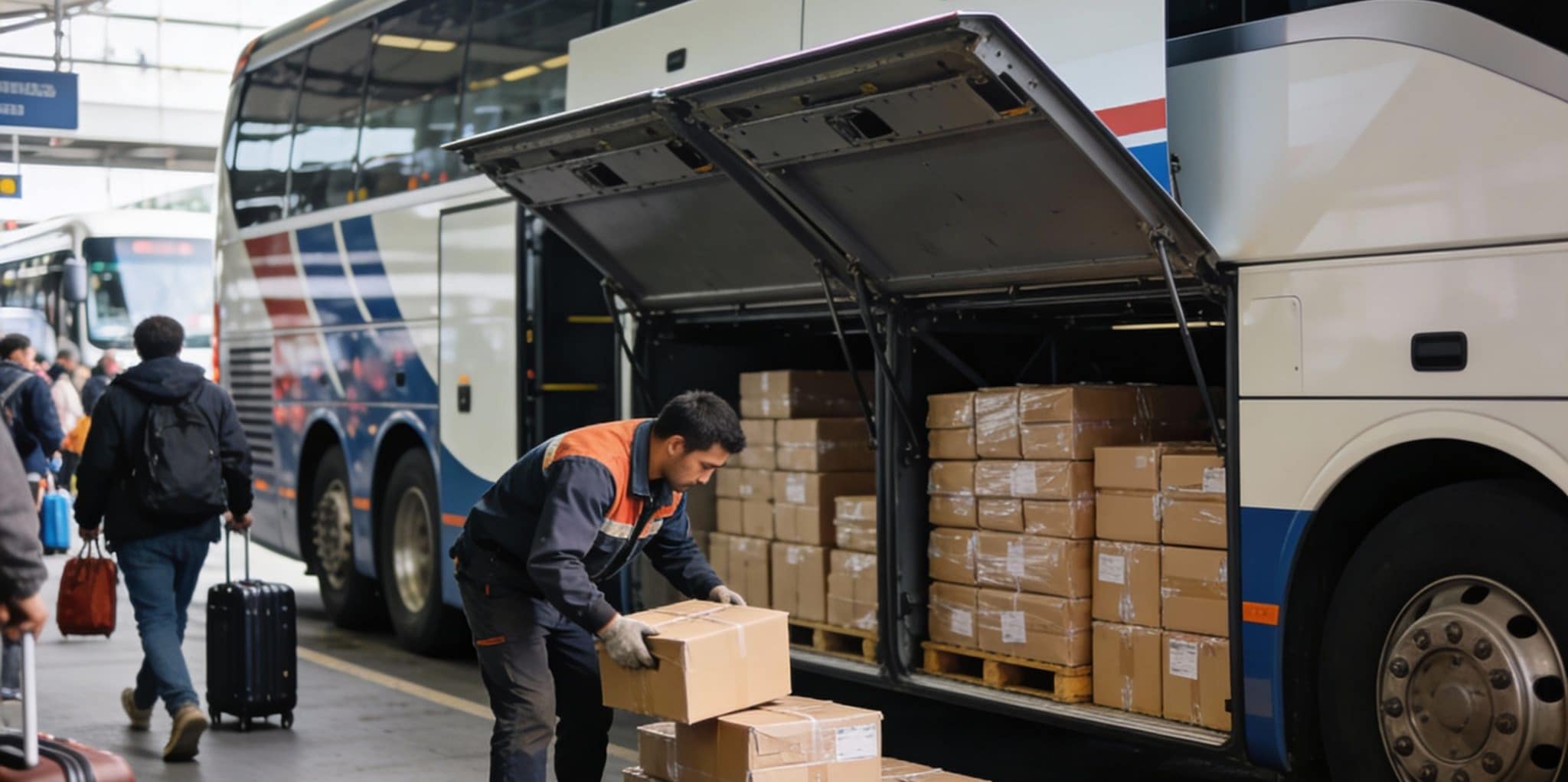
If your buses are running regular routes with empty cargo holds, you aren’t just moving people, you’re “driving air.” Here is why merging these two worlds is the ultimate win-win for operators, customers, and the environment.
By utilizing the capacity of buses more effectively, a bus operator can significantly increase their revenue potential.
1. Turning “Dead Space” into High-Margin Profit
The most immediate business benefit is the maximization of every kilometer traveled. A bus costs roughly the same to operate whether the cargo hold is empty or full.
By integrating #LogisticsRevolution strategies, operators can convert underutilized “dead space” into a secondary revenue stream. Because the vehicle is already committed to the route, the marginal cost of carrying parcels is incredibly low, making it a high-margin “side-hustle” that directly boosts the bottom line.
2. The “Remote” Advantage: Dominating the Hard-to-Reach
Traditional courier companies often struggle with the #LastMile in sparsely populated or remote areas. High fuel costs and low drop-off density often mean they operate at a loss in these regions.
Public passenger networks already serve these communities reliably. By leveraging existing stops, bus operators can offer delivery services in areas where competitors lose margin. This allows you to dominate niche markets with significantly lower overhead than traditional logistics firms.
3. Predictability: The Secret Weapon of Logistics
In the shipping world, an accurate ETA is a premium feature. While traditional freight often falls victim to “delivery windows,” passenger networks operate on fixed, public schedules.
This inherent predictability is a massive competitive edge. When a parcel is tied to an #IntercityBus schedule, the recipient knows exactly when it will arrive. This reliability transforms a standard delivery into a premium service that logistics managers and e-commerce platforms crave.
4. Diversification Against Seasonal Fluctuations
Passenger demand is notoriously fickle, often swinging wildly based on holidays, school terms, or tourism seasons. Integrating a parcel business provides a vital economic buffer.
E-commerce and commercial freight demands often remain steady or even peak when passenger travel is low. This #DigitalTransformation of the business model ensures that your fleet remains profitable 365 days a year, regardless of how many people are in the seats.
5. A Greener Footprint through Shared Infrastructure
Beyond the balance sheet, this integration is a massive win for #Sustainability. By utilizing the “spare” capacity of a vehicle that is already on the road, we reduce the need for additional delivery vans.
This move toward #GreenLogistics helps cities reduce congestion and lowers the carbon footprint per parcel. It positions passenger networks not just as a transport option, but as a critical pillar of a sustainable, multi-modal #CityCarrier ecosystem.
Stop Driving Air, Start Driving Growth
The infrastructure for a world-class delivery network is already in your hands—it’s the fleet you’re currently running. With tools like #routeXpander, transitioning into the parcel space is no longer a complex hurdle but a logical evolution.
By integrating passenger and parcel logistics, you stop leaving money on the road and start building a more resilient, predictable, and profitable future.
To learn more about how routeXpander can benefit your logistics business, please contact us


